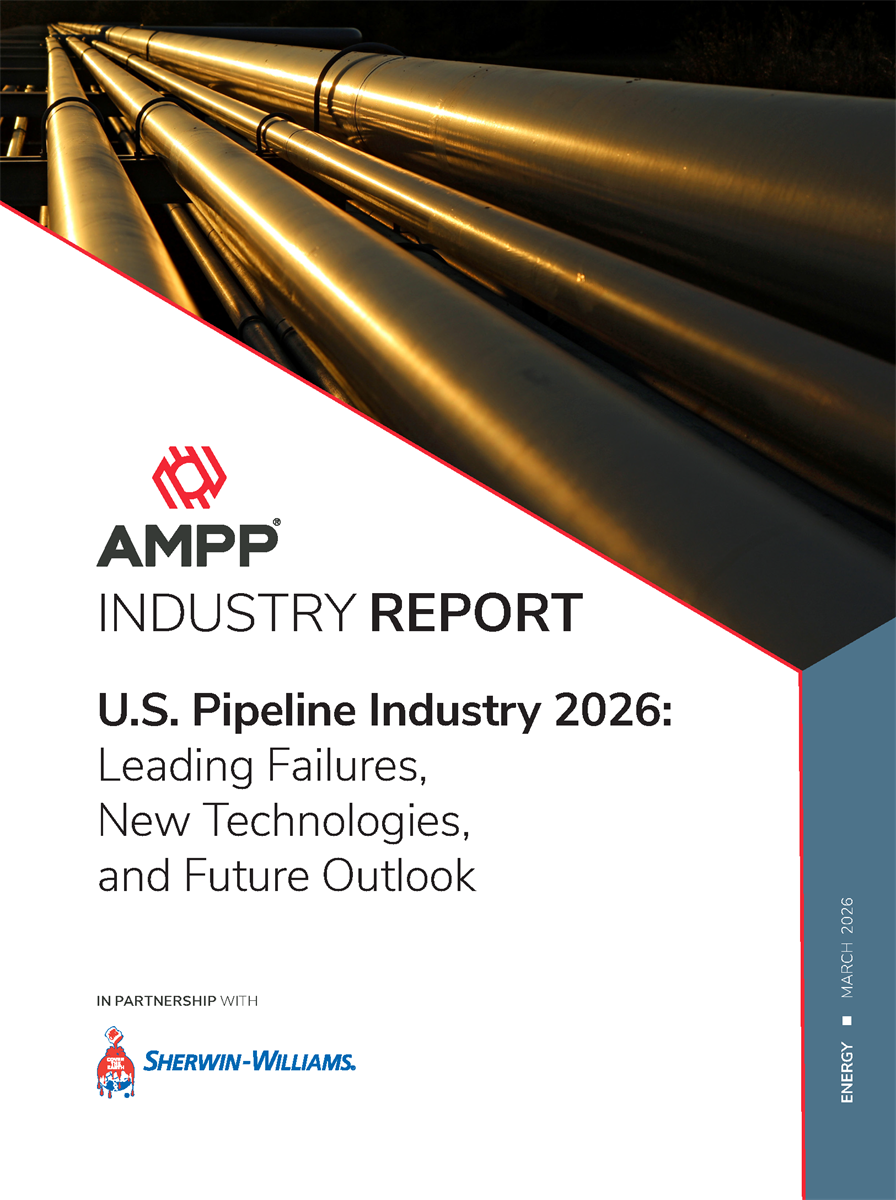
Houston, Texas – (March 9, 2026) — The Association for Materials Protection and Performance (AMPP), the leading global authority in materials protection and performance, has released its first Industry Report for the energy sector: U.S. Pipeline Industry 2026: Leading Failures, New Technologies, and Future Outlook. This publication also launches AMPP’s new energy-focused report series, created to give industry professionals clear, data-driven insight into infrastructure risks and practical steps for addressing them.
Using publicly available data from the U.S. Department of Transportation’s Pipeline and Hazardous Materials Safety Administration (PHMSA), along with input from experienced industry professionals, the report examines the root causes of pipeline incidents. It identifies corrosion as a major, but avoidable, factor and outlines the additional challenges posed by aging assets, workforce shifts, and the introduction of new energy systems.
Across the country, more than three million miles of pipelines transport natural gas, crude oil, refined fuels, and emerging energy carriers. PHMSA records show that between 600 and 700 incidents are reported each year, with corrosion consistently ranking among the top contributors. Historically, corrosion has been responsible for roughly 18% of incidents, and in 2024 that figure climbed to more than 25%. These findings reinforce the importance of strong integrity management programs, effective corrosion control practices, and a well-trained workforce.
“Corrosion remains one of the most significant – and most preventable – risks to pipeline safety and reliability,” said AMPP CEO Alan Thomas. “By combining objective data with insight from across the industry, AMPP is helping operators, regulators, and other stakeholders better understand these risks and strengthen integrity programs that protect infrastructure, communities, and the energy systems we rely on.”
Sponsored by Sherwin-Williams, the report also explores how the pipeline industry is evolving. It looks at the growing use of digital tools and inspection technologies, and the expansion of hydrogen and carbon dioxide pipelines. These developments are increasing the need for skilled personnel, consistent standards, and practical approaches to protecting and operating pipelines safely.
“As pipeline systems age and new energy carriers come online, maintaining asset integrity becomes increasingly complex,” said Tim Gonzalez, Vice President of Energy Integrity Solutions at AMPP. “This report offers a clear, fact-based look at the risks the industry faces and the steps it can take to address them. It stresses the role of corrosion prevention, qualified professionals, and standards-driven practices in ensuring pipelines remain safe and reliable throughout their service life.”
The report draws on contributions from AMPP technical experts and industry partners, including specialists in engineering, inspection, and asset integrity. It incorporates insights on regulatory trends, workforce development, emerging technologies, and proven corrosion mitigation strategies.
As the first publication in AMPP’s new energy Industry Report series, the report reflects AMPP’s commitment to serving as a trusted resource for the global corrosion and materials protection community. Future reports will address additional sectors and emerging infrastructure challenges, support industry collaboration and advance safety, sustainability, and asset performance worldwide.
The full report is available at: https://content.ampp.org/industry-reports/US-Pipeline-Industry-2026
ABOUT AMPP
The Association for Materials Protection and Performance (AMPP) is a global leader dedicated to the protection of assets and the performance of industrial and natural materials. Established in 2021, AMPP brings together nearly 150 years of combined expertise from legacy organizations to advance solutions that enhance safety, security, and sustainability across industries. Serving more than 40,000 members in over 150 countries, AMPP is the largest organization of its kind, providing innovative standards, certifications, training, and resources. Headquartered in the United States with offices in Houston and Pittsburgh, AMPP also operates regional offices in Brazil, Canada, China, Dubai (training center), Malaysia, Saudi Arabia, and the United Kingdom. www.ampp.org