GLOBAL NEWS RELEASE – (July 15, 2026) — The Association for Materials Protection and Performance (AMPP) is proud to support AEGIS (Advanced Protection for MaritimE Infrastructure and Globally SustaInable Shore Power), a new international research initiative led by the National Technical University of Athens (NTUA) and funded by Lloyd's Register Foundation. The five-year project will examine corrosion and electrical safety challenges associated with shore power systems, helping advance the safe and sustainable electrification of ports worldwide.
As a project partner, AMPP will contribute corrosion and materials protection expertise, technical resources, industry engagement, and support for standards and workforce development activities that help translate research findings into practical solutions for industry.
“Maritime electrification introduces new operational and corrosion-control challenges that require cross-disciplinary collaboration and globally informed technical guidance,” said Brad Wilder, P.E. (KY), CAE, Senior Director of Technical Advancement at AMPP. “Through AEGIS, AMPP is helping connect corrosion expertise, standards development, technical communities, and workforce knowledge to support safer and more resilient shore power infrastructure worldwide.
The following announcement was originally developed by NTUA and Lloyd's Register Foundation and is shared with permission.
__________________________________________
The global adoption of sustainable shore power is set to overcome one of its least addressed technical challenges following the launch of the newly inaugurated AEGIS (Advanced Protection for MaritimE Infrastructure and Globally SustaInable Shore Power) project, funded by Lloyd’s Register Foundation.
Summarizing bullet points:
- A grant from Lloyd’s Register Foundation launches the AEGIS project to further enhance the resilience and operational safety of maritime electrification.
- Addresses one of the last technical hurdles to Onshore Power Supply technology and fosters confidence in green technologies.
- A global partnership uniting NTUA, AMPP, IEEE, and IMarEST to establish unified industry standards and equip the maritime workforce with future-ready skills.
Main Text:
Led by the National Technical University of Athens (NTUA) and funded by Lloyd’s Register Foundation, the AEGIS project aims to support and widen the safe adoption of Onshore Power Supply (OPS) — the practice that allows a docked ship to draw electrical power from environmentally sustainable shore-based systems, rather than running its own diesel engines while at berth. OPS is sometimes referred to informally as ‘cold ironing’ in industry usage.
This strategic project establishes a comprehensive research and validation framework to address the challenges that arise when ships are connected to Onshore Power Supply systems at berth. It focuses on advancing corrosion prevention and ensuring the long-term structural integrity of maritime assets, while further solidifying the high electrical safety standards already associated with shore-side connections.
“The AEGIS project brings together NTUA’s complementary expertise in marine engineering, electrical engineering and materials science, alongside a high-level coalition of international organisations and leading professional and standardisation bodies. AMPP, IMarEST and IEEE contribute their expertise to support the effective implementation of the project. AEGIS is designed to generate the scientific evidence required to enable the safe and optimised deployment of shore power worldwide.
Key Activities:
- Research on the ship–port interface to gather baseline data, advance understanding of protection requirements, and assess the performance of mitigation and prevention strategies, including impressed-current cathodic protection (ICCP) and advanced grounding systems.
- Running simulation models to validate the data gathered and explore different operating variables, leading to the development of a ship-to-port digital twin for industry use, as well as adaptive ICCP system and grounding prototypes.
- Field testing the developed protection strategies at pilot ports in Greece, Kyllini, Igoumenitsa, and across European port infrastructure, with the aim of demonstrating measurable improvements in infrastructure resilience at pilot sites.
- Providing a robust scientific basis to enable professional and regulatory bodies to develop and embed new standards, regulations, and best practice across the industry.
- Empowering maritime professionals with the skills and knowledge to deploy the advanced protection strategies in their own scenarios, through training modules, workshops, and use of the digital twin.
Quote – Project Spokesperson
“Onshore Power Supply is absolutely vital for the decarbonisation of our ports and has rightly taken centre stage in our industry’s environmental strategy. However, the complex phenomena that can occur during ship and port connection are often left unspoken and are not yet properly managed. Through AEGIS, the consortium is bringing together some of the world’s leading engineering voices to change that. Our goal is to ensure that as shipping moves towards electrification, these systems are deployed reliably and at scale, protecting both critical infrastructure and the people who operate them.”
— Prof. John Prousalidis, Project Coordinator, National Technical University of Athens
The Impact:
By resolving one of the final technical hurdles to OPS technology, the project is cementing shore power as a secure, long-term vehicle for port decarbonization while fostering global confidence in green technologies. The scientific outputs of the project—on-site validated models and advanced protection methods—will be paired with a deep commitment to capacity building, delivered through specialized training programmes. AEGIS will thus ensure that the global maritime workforce is fully prepared to manage the infrastructure of the future, safeguarding both human life and high-value maritime assets.
Quote – Director of Technologies LRF
“A cleaner, lower carbon and more efficient shipping industry ultimately benefits us all. Environmentally sustainable shore-based power systems are a vital pathway to achieving these goals. Our partnership with NTUA on the AEGIS project is helping develop reliable, evidence-based tools and techniques to safely scale Onshore Power Supply practices, reducing use of fossil fuels and supporting port ecosystems as drivers of the regenerative ocean economy.”
— Jan Przydatek, Director of Technologies, Lloyd’s Register Foundation
Call to Action:
Having officially commenced in November 2025, the AEGIS project is already gathering data and vital operational insights. Port authorities, ship operators, and technology providers are invited to engage with the consortium to nurture a broader industry dialogue and ensure the project's results reflect the needs of the entire sector’s stakeholders. In the coming months, a dedicated digital platform will be launched to document the project’s journey and provide access to its public material, safety guidelines, and training resources. To follow the progress of this initiative, connect with Lloyd’s Register Foundation and the AEGIS partners on LinkedIn.
ABOUT AMPP
The Association for Materials Protection and Performance (AMPP) is a global leader dedicated to the protection of assets and the performance of industrial and natural materials. Established in 2021, AMPP brings together nearly 150 years of combined expertise from legacy organizations to advance solutions that enhance safety, security, and sustainability across industries. Serving more than 42,000 members in over 150 countries, AMPP is the largest organization of its kind, providing innovative standards, certifications, training, and resources. Headquartered in the United States with offices in Houston and Pittsburgh, AMPP also operates regional offices in Brazil, Canada, China, Dubai (training center), Malaysia, Saudi Arabia, and the United Kingdom. www.ampp.org
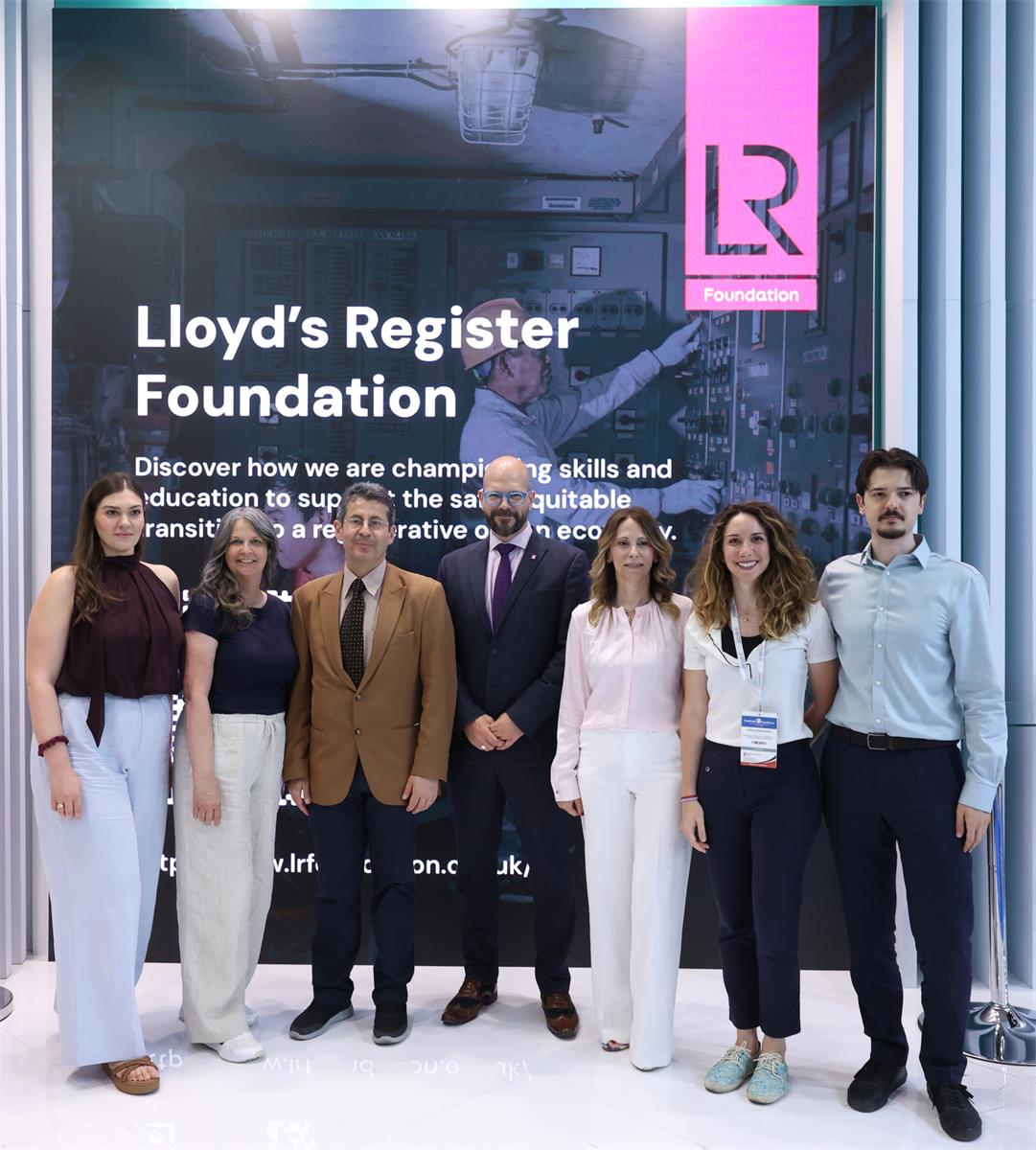
Photo caption: Members of the funding organisations gather to celebrate the grant award.